Cerebral Palsy and Impaired Mobility: How Early Detection and Gait Training Can Change a Child's Future
Every Child Deserves the Opportunity to Move with Confidence
Watching a child take their first steps is one of life's most memorable milestones. While every child develops at their own pace, persistent movement difficulties such as poor balance, toe-walking, stiffness, or delayed walking may indicate an underlying neurological condition such as Cerebral Palsy (CP).
Although Cerebral Palsy cannot be cured, early diagnosis and appropriate rehabilitation can significantly improve mobility, independence, and quality of life. One of the most effective tools used during rehabilitation is a gait trainer, often referred to as a Gait Trekker, which enables children to safely practice walking while developing strength, balance, and confidence.
Understanding the signs of Cerebral Palsy and seeking timely intervention can make a meaningful difference in a child's development.
What is Cerebral Palsy?
Cerebral Palsy is a group of neurological disorders caused by damage to the developing brain before, during, or shortly after birth. The condition primarily affects muscle tone, posture, coordination, and movement.
CP is a lifelong condition, but it is non-progressive, meaning the brain injury itself does not worsen over time. However, without proper intervention, movement challenges and muscle stiffness may become more pronounced as a child grows.
Every child with Cerebral Palsy experiences different symptoms and varying levels of mobility, making individualized rehabilitation essential.
Early Signs Parents Should Watch For
Early recognition allows healthcare professionals to begin therapy during the most critical period of brain development.
Some common early signs include:
Delayed achievement of developmental milestones
Difficulty sitting without support
Persistent toe-walking
Scissor gait (legs crossing while walking)
Poor balance and frequent falls
Stiff or floppy muscles
Limited coordination during movement
Preference for using one side of the body
Difficulty crawling or standing independently
These signs do not always indicate Cerebral Palsy, but they should prompt evaluation by a pediatrician or pediatric neurologist.
Understanding Impaired Mobility in Cerebral Palsy
Impaired mobility is one of the most common challenges faced by children with Cerebral Palsy.
Depending on the type and severity of CP, children may experience:
Muscle tightness (spasticity)
Weak muscles
Poor postural control
Reduced balance
Limited endurance
Difficulty shifting body weight
Abnormal walking patterns
Reduced coordination
These movement difficulties can affect everyday activities such as walking, playing, attending school, and participating in social interactions.
Without appropriate rehabilitation, children may become increasingly dependent on caregivers for daily activities.
Fortunately, modern rehabilitation focuses on helping children develop functional mobility rather than simply managing symptoms.
Why Early Rehabilitation Matters
Research consistently shows that children benefit most when rehabilitation begins early.
The developing brain has remarkable neuroplasticity—the ability to form new neural connections through repeated practice and movement.
Early intervention can help children:
Develop better walking patterns
Improve muscle strength
Enhance balance and coordination
Reduce secondary complications
Encourage participation in daily activities
Improve confidence and independence
A comprehensive rehabilitation plan often includes physiotherapy, occupational therapy, speech therapy when needed, orthotic support, and mobility devices tailored to the child's abilities.
How a Gait Trekker Supports Mobility
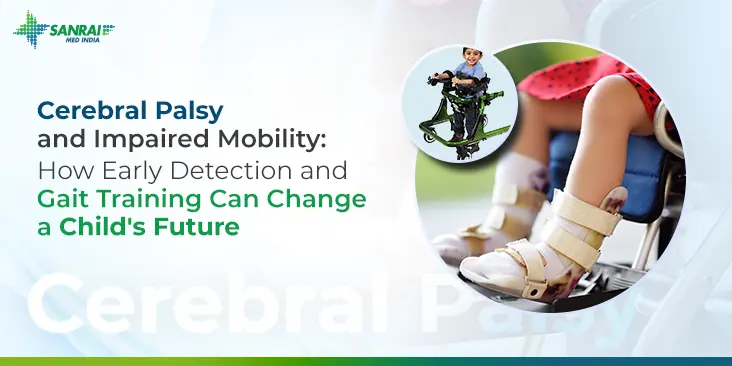
For children who have difficulty walking independently, a Gait Trekker (gait trainer) provides a safe and supportive environment for gait training.
Unlike standard walkers, a gait trainer is specifically designed to provide adjustable support while encouraging active participation in walking.
It offers:
Trunk Support - Proper trunk positioning helps children maintain an upright posture, reducing excessive leaning and encouraging more natural movement patterns.
Pelvic Support - Pelvic stabilization assists with weight shifting, helping children practice a smoother and more symmetrical walking pattern.
Safe Weight-Bearing - Children can gradually bear weight through their legs while remaining supported, helping strengthen muscles involved in standing and walking.
Improved Balance - The supportive frame allows children to practice stepping without the fear of falling, encouraging greater confidence during therapy.
Repetitive Walking Practice - Walking requires repetition. A gait trainer enables children to practice hundreds of steps safely, helping reinforce motor learning and improve functional mobility over time.
Beyond Physical Benefits
The advantages of gait training extend far beyond movement alone.
As children become more mobile, they often experience:
Greater independence
Increased participation in play
Better interaction with family and friends
Improved emotional well-being
Higher self-confidence
Enhanced social development
Mobility enables children to explore their surroundings, learn through experience, and participate more actively in everyday life.
A Collaborative Rehabilitation Journey
Successful management of Cerebral Palsy involves collaboration among healthcare professionals, therapists, caregivers, and families.
Parents play an especially important role by encouraging regular therapy sessions, supporting home exercise programs, and celebrating every milestone—no matter how small.
Consistency is often more important than intensity. Small improvements achieved through regular practice can lead to meaningful long-term gains.
Looking Toward a More Independent Future
A diagnosis of Cerebral Palsy can feel overwhelming for families, but it does not define a child's potential.
With early detection, evidence-based rehabilitation, and appropriate mobility support such as a Gait Trekker, many children develop greater independence and improved functional mobility. Every step practiced during therapy contributes to stronger muscles, better coordination, and increased confidence.
The goal is not simply to help a child walk—it is to help them participate more fully in school, family life, play, and their community.
When movement becomes possible, opportunities begin to grow. And with the right support, every child can take meaningful steps toward a more active, independent future.
Disclaimer
This article is intended for educational purposes only and should not replace professional medical advice. If you notice developmental delays or movement concerns in your child, consult a pediatrician, pediatric neurologist, or rehabilitation specialist for a comprehensive evaluation and personalized treatment plan.
Frequently Asked Questions
Q: Do All People With Cerebral Palsy Need a Wheelchair?
A: No. Some individuals walk independently, while others use walkers, rollators, or wheelchairs depending on their mobility needs.
Q: Can Mobility Aids Improve Quality of Life?
A: Yes. Mobility aids improve independence, safety, participation, and overall well-being.
Q: What Is the Best Mobility Device for Cerebral Palsy?
A: There is no one-size-fits-all solution. The best device depends on the individual's physical abilities, mobility goals, and daily lifestyle requirements.
Cerebral Palsy can significantly affect movement, balance, posture, and muscle control, making daily activities more challenging. However, the right mobility support can make a remarkable difference. From a Commode wheelchair and Shower wheelchair to a Carbon fibre power wheelchair, Portable power chair, or Electric power chair, there are numerous mobility solutions available to meet individual needs. Choosing the right device with professional guidance can improve safety, independence, comfort, and quality of life, helping individuals with Cerebral Palsy live more active and fulfilling lives.


