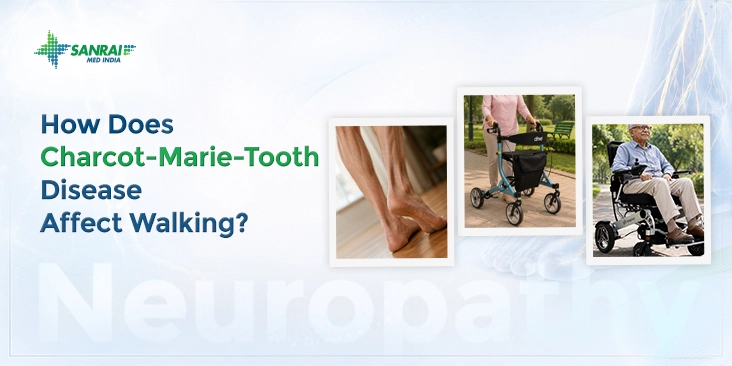
How Does Charcot-Marie-Tooth Disease Affect Walking?
Charcot-Marie-Tooth
Disease (CMT) is a
rare inherited neurological disorder that affects the peripheral nerves,
leading to muscle weakness, foot drop, poor balance, and difficulty
walking. These nerves carry signals between the brain, spinal cord, and
muscles, so when they become damaged, movement and sensation are affected.
Although there is currently no cure, early diagnosis, physical therapy,
rehabilitation, and the use of appropriate mobility aids can
significantly improve quality of life and help individuals remain independent.
What Is Charcot-Marie-Tooth Disease (CMT)?
Charcot-Marie-Tooth
Disease is a
progressive genetic condition that affects the nerves controlling movement and
sensation in the hands and feet. It is one of the most common inherited
neurological disorders, affecting approximately 1 in 2,500 people
worldwide. Symptoms usually begin during childhood or early adulthood, although
they can appear later in life. The condition progresses slowly, with severity
varying from person to person.
Types of CMT
The major
forms include:
- CMT Type 1
- CMT Type 2
- CMT Type 4
- CMTX (X-linked CMT)
Each type
affects the nerves differently but can lead to walking difficulties,
muscle weakness, and reduced mobility.
What Causes Charcot-Marie-Tooth Disease?
Charcot-Marie-Tooth
Disease is
caused by inherited genetic mutations that damage the peripheral
nerves. These mutations interfere with the nerves' ability to send signals
to the muscles, resulting in weakness and loss of sensation.
Types of Inheritance
The
condition may be inherited through:
- Autosomal Dominant inheritance
- Autosomal Recessive inheritance
- X-linked Inheritance
Risk Factors
People
are more likely to develop Charcot-Marie-Tooth Disease if they have:
- A family history of CMT
- Inherited genetic mutations
- An affected parent or close
relative
Symptoms of Charcot-Marie-Tooth Disease
Symptoms
usually develop gradually and worsen over time as nerve damage progresses.
Early Symptoms
Common
early signs include:
- Muscle weakness in the feet and ankles
- High foot arches
- Frequent tripping
- Poor balance
- Difficulty running
Progressive Symptoms
As the
condition advances, individuals may experience:
- Foot drop
- Difficulty walking
- Loss of sensation in the
feet
- Hand weakness
- Muscle cramps
- Fatigue after walking
- Reduced coordination
- Difficulty climbing stairs
Early
recognition of these symptoms can help individuals receive appropriate
treatment sooner.
How Is Charcot-Marie-Tooth Disease Diagnosed?
Doctors
diagnose Charcot-Marie-Tooth Disease using a combination of medical
history, physical examinations, and specialized tests.
Diagnostic
methods include:
- Medical and family history
review
- Physical and neurological
examination
- Nerve conduction studies
- Electromyography (EMG)
- Genetic testing
- MRI scans when required to
rule out other neurological conditions
Early
diagnosis allows treatment to begin before significant mobility loss occurs.
How Does Charcot-Marie-Tooth Disease Affect
Walking?
As Charcot-Marie-Tooth
Disease progresses, muscles in the legs and feet gradually weaken, making
walking increasingly difficult.
Common
mobility challenges include:
- Foot drop, making it difficult to
lift the front of the foot
- Poor balance and
coordination
- High-stepping gait
- Difficulty walking long
distances
- Trouble climbing stairs
- Increased risk of falls
- Reduced walking endurance
These
changes can make everyday activities more challenging, highlighting the
importance of rehabilitation and supportive care.
Treatment for Charcot-Marie-Tooth Disease
Although
there is no cure for Charcot-Marie-Tooth Disease, treatment focuses on
relieving symptoms, improving mobility, and maintaining independence.
Treatment
options include:
- Physical therapy to strengthen muscles and
improve flexibility
- Occupational therapy to
support daily activities
- Pain management for nerve
pain or muscle discomfort
- Orthotics and braces (AFOs) to improve walking
stability
- Surgery in severe cases to
correct foot deformities
Regular
rehabilitation helps slow functional decline and improves confidence during
movement.
Rehabilitation and Mobility Support
Rehabilitation
plays a key role in helping individuals with Charcot-Marie-Tooth Disease
remain active.
Important
rehabilitation strategies include:
- Daily stretching to maintain
flexibility
- Supervised strength training
- Balance exercises to reduce
falls
- Physiotherapy to improve
walking patterns
- Fall prevention through home
safety modifications and supportive footwear
A
personalized rehabilitation program can significantly improve mobility and
overall quality of life.
Mobility Aids for People with CMT
Using the
right mobility aids can improve safety, comfort, and independence.
Common
mobility aids include:
- Walking canes
- Walkers
- Rollators
- Manual wheelchairs
- Power wheelchairs
- Orthopedic footwear
Healthcare
professionals recommend mobility aids based on an individual's symptoms and
level of mobility.
Lifestyle Tips for Living with Charcot-Marie-Tooth
Disease
Healthy
lifestyle habits can help manage symptoms and improve long-term mobility.
Helpful
tips include:
- Stay physically active with
low-impact exercises such as walking, swimming, or cycling.
- Maintain a healthy weight to
reduce stress on joints and muscles.
- Wear supportive footwear to
protect the feet.
- Keep living spaces free from
fall hazards.
- Attend regular medical
checkups to monitor disease progression.
- Consider home modifications
such as grab bars and stair railings to improve safety.
When Should You See a Doctor?
Seek
medical advice if you experience:
- Progressive muscle
weakness
- Persistent difficulty
walking
- Frequent falls
- Loss of balance
- Numbness or tingling in the
hands or feet
- A family history of Charcot-Marie-Tooth
Disease
Early
medical evaluation can help prevent complications and improve long-term
mobility.
Frequently Asked Questions (FAQs)
Is
Charcot-Marie-Tooth Disease hereditary?
Yes. Most forms of CMT are inherited through genetic mutations.
Can
Charcot-Marie-Tooth Disease be cured?
No. There is currently no cure, but treatment focuses on managing symptoms and
improving mobility.
What
exercises are recommended?
Physical therapy, stretching, balance exercises, and supervised strength
training are commonly recommended.
Which
mobility aids help people with CMT?
Walking canes, walkers, rollators, AFO braces, manual wheelchairs, and
power wheelchairs may help depending on symptom severity.
What is
the life expectancy of someone with CMT?
Most people with Charcot-Marie-Tooth Disease have a normal life
expectancy, although mobility may gradually decline over time.
Charcot-Marie-Tooth
Disease (CMT) is a
progressive inherited neurological disorder that affects walking,
balance, muscle strength, and coordination. While there is no cure, early
diagnosis, physical therapy, rehabilitation, and appropriate mobility
aids can help people manage symptoms and maintain independence. With
personalized treatment, healthy lifestyle choices, and regular medical care,
many individuals with Charcot-Marie-Tooth Disease continue to lead
active and fulfilling lives.


