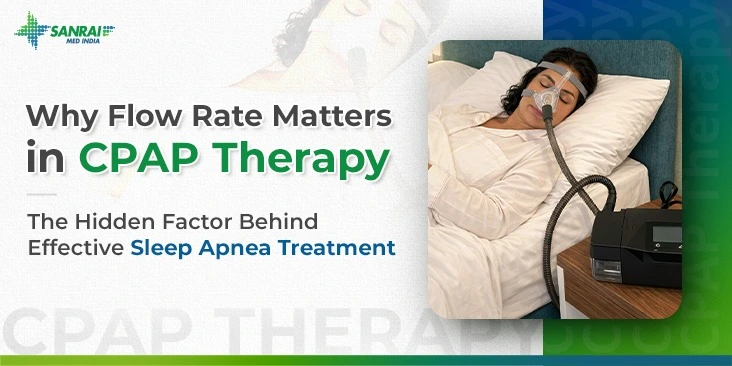
Why Flow Rate Matters in CPAP Therapy: The Hidden Factor Behind Effective Sleep Apnea Treatment
When choosing a CPAP machine, most people focus on visible features like comfort, noise levels, or humidification. While these are important, there’s one critical factor that often goes unnoticed—flow rate. It may sound technical, but flow rate plays a direct role in how effectively your CPAP therapy works and how comfortable your experience feels every night.
Let’s break down why flow rate truly matters.
What is Flow Rate in CPAP?
Flow rate refers to the volume of air a CPAP machine can deliver per minute, typically measured in liters per minute (L/min). This airflow is what keeps your airway open during sleep, preventing it from collapsing—a key issue in sleep apnea.
But here’s the important part: it’s not just about delivering air—it’s about delivering enough air consistently, even when your breathing changes.
Ensures Stable Airway Support
The primary purpose of CPAP therapy is to maintain continuous positive airway pressure. If the machine cannot deliver sufficient airflow when needed, the pressure may drop, leading to partial or complete airway collapse.
A higher and well-regulated flow rate ensures:
Stable pressure delivery
Fewer apnea or hypopnea events
More effective therapy overall
In simple terms, without adequate flow rate, even the best pressure settings may fail to do their job.
Adapts to Your Breathing Patterns
Your breathing is not constant throughout the night. It changes depending on:
Sleep stages (REM vs non-REM)
Body position
Nasal congestion or obstruction
A CPAP machine with a strong flow capability can quickly respond to these variations, ensuring uninterrupted therapy. This becomes even more important for users who:
Breathe through their mouth
Have higher pressure requirements
Experience frequent breathing irregularities
Without sufficient flow, the machine may lag behind your needs, causing discomfort or ineffective treatment.
Reduces the Feeling of Air Hunger
One of the most common complaints among CPAP users—especially beginners—is the sensation of not getting enough air, often described as “air hunger.”
This usually happens when:
The flow rate is insufficient
The machine cannot keep up with inhalation demand
A higher flow rate helps eliminate this issue by ensuring that every breath feels natural and unrestricted. This significantly improves user comfort and makes it easier to adapt to therapy.
Supports High-Pressure Therapy
Patients with moderate to severe sleep apnea often require higher pressure settings. Delivering higher pressure demands a corresponding increase in airflow.
If the machine lacks adequate flow capacity:
Pressure delivery becomes inconsistent
Therapy effectiveness drops
Mask leaks may increase
A robust flow rate ensures that even at higher pressures, the machine performs smoothly without compromising comfort.
Minimizes Mask Leaks Impact
Mask leaks are common, especially with full-face masks or improper fitting. While leaks can’t always be avoided, a CPAP machine with a higher flow rate can compensate for minor leaks by maintaining consistent pressure.
This means:
Fewer therapy interruptions
More reliable performance
Better sleep quality
Machines with lower flow capacity may struggle in such situations, leading to frequent disturbances.
Enhances Humidification Performance
Humidification is essential for preventing dryness in the nose, throat, and airways. However, proper humidification depends on how effectively air is delivered through the system.
A stable and adequate flow rate ensures:
Even distribution of moisture
Reduced dryness and irritation
Improved overall comfort
This is especially important in environments with dry air or air-conditioned rooms, where dryness is more pronounced.
Improves Overall Therapy Compliance
At the end of the day, the best CPAP machine is the one you can use consistently. Many users discontinue therapy because of discomfort, breathing issues, or ineffective results.
A machine with an optimal flow rate:
Feels more natural to breathe with
Reduces discomfort
Improves sleep quality
All of this leads to better compliance, which is crucial for long-term health benefits.
What to Look for in a CPAP Machine
When evaluating a CPAP device, consider asking:
Does it provide high and consistent flow output?
Can it handle peak inspiratory demand?
Is it designed to adapt to real-time breathing patterns?
While flow rate specifications are not always prominently advertised, they are a key indicator of the machine’s performance capability.
Flow rate might not be the first feature you notice when choosing a auto CPAP machine, but it is undoubtedly one of the most important. It directly impacts how effectively the machine supports your breathing, how comfortable your therapy feels, and ultimately, how successful your treatment is.
Think of it this way: pressure is the goal, but flow is what delivers it.
So, when selecting your next CPAP device, don’t just look at comfort features—dig deeper. A machine with a strong and responsive flow rate can make the difference between struggling through therapy and finally getting the restful sleep you deserve.


