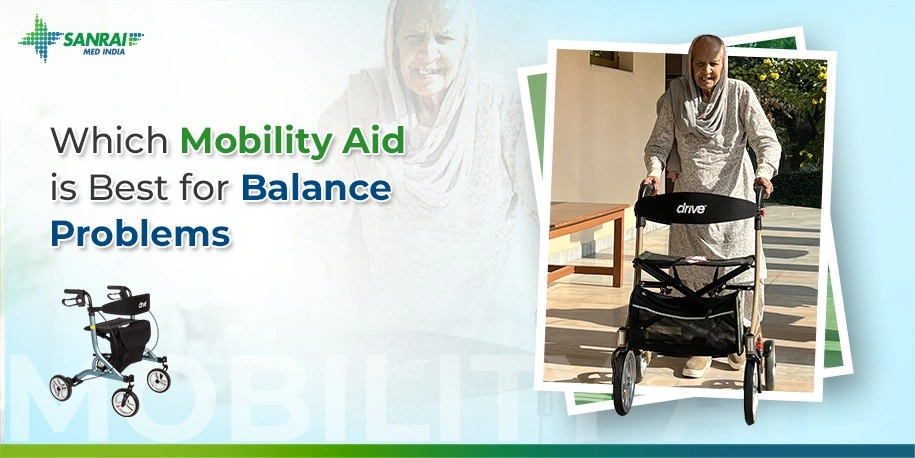
Which Mobility Aid Is Best for Balance Problems?
Safe walking plays a critical role in maintaining independence, confidence, and overall quality of life. However, many individuals begin to experience mobility challenges such as balance issues, muscle weakness, and reduced coordination over time. These problems can make everyday movement unsafe and increase the risk of falls. In such situations, choosing the right mobility aid for safe walking becomes essential. Whether it is a walker for support, a rollator walker with seat, or a wheelchair for mobility assistance, the right choice can improve stability, reduce risk, and help maintain independence. Understanding how to select the best walking aid for balance problems ensures that movement remains safe and controlled in daily life.
Understanding Mobility Challenges
What Affects Safe Movement
Safe movement depends on a combination of balance, muscle strength, coordination, and joint flexibility. When any of these factors are affected, walking becomes unstable and difficult to manage. Poor balance can lead to uneven steps, while reduced strength can make it harder to stand or walk for extended periods. Limited coordination further increases the chances of tripping or losing control while moving. These challenges often develop gradually, making them difficult to notice at an early stage. This is why using the right mobility support device is important to maintain safe walking and prevent further complications.
Early Signs You Should Not Ignore
Mobility problems often begin with small and subtle changes that are easy to overlook. Individuals may start experiencing difficulty walking long distances, feel unsteady while standing, or develop a fear of falling during movement. Slower walking speed, reduced confidence, and frequent fatigue are also common signs. Ignoring these early indicators can lead to serious mobility decline over time. Identifying these warning signs early allows individuals to take action and consider the use of a walking aid for stability and support before the situation worsens.
Why Choosing the Right Mobility Aid Matters
Risks of Using the Wrong Support
Selecting the wrong mobility aid can increase the risk of falls and reduce overall safety. For example, using a rollator when strong stability is required may lead to imbalance, while using a walker when more flexibility is needed can restrict movement. Incorrect support can also cause poor posture, discomfort, and additional strain on joints. Over time, this can reduce confidence in movement and make individuals more dependent rather than independent.
Benefits of the Right Mobility Aid
Choosing the correct mobility aid for walking support offers significant advantages. It improves balance, enhances stability, and reduces the risk of falls. The right support also helps maintain proper posture and allows smoother, more controlled movement. Most importantly, it restores confidence, enabling individuals to carry out daily activities safely and independently. A well-selected mobility aid can greatly improve quality of life and ensure safer movement at all times.
Types of Mobility Aids Available
Walkers
A walker for elderly and rehabilitation support is one of the most reliable mobility aids for individuals who require maximum stability. It is designed with a strong frame that supports body weight and ensures controlled movement. Walkers are especially useful for people with severe balance issues or those recovering from surgery. They are commonly used indoors due to their stable structure and are ideal for short-distance movement. Different types of walkers, including folding walkers and lightweight models, provide flexibility based on individual needs. For those searching for a walking frame for balance support, a walker offers strong and dependable assistance.
Rollators
A rollator walker with wheels and seat is an advanced mobility aid designed for individuals who need support but also want flexibility in movement. Unlike traditional walkers, rollators come with four wheels, hand brakes, and a built-in seat. This allows users to move smoothly without lifting the device and take rest whenever needed. Rollators are ideal for both indoor and outdoor use, making them suitable for individuals who remain active but require additional support. They are particularly helpful for those who experience fatigue while walking and need a mobility aid for walking and resting.
Wheelchairs (Supportive Mention)
A wheelchair for mobility support is used when walking becomes difficult or unsafe. It provides complete support and eliminates the need for physical walking. Wheelchairs are available in manual and powered options, depending on the level of assistance required. They are suitable for individuals with severe mobility limitations or those undergoing long-term recovery. A wheelchair ensures safe movement and allows users to maintain independence without physical strain, making it an essential mobility solution in advanced cases.
Walker vs Rollator Key Differences
Design and Structure
A walker features a simple, sturdy frame designed for maximum stability, while a rollator includes wheels, brakes, and a seat for enhanced functionality. This difference in design makes walkers more stable and rollators more flexible and convenient for movement.
Mobility and Ease of Use
Walkers require lifting or controlled pushing, making them slower but highly stable. Rollators, on the other hand, provide smooth movement with wheels, allowing users to walk more easily over longer distances.
Best Suitable Conditions
Walkers are best suited for individuals with severe balance issues or limited strength, while rollators are ideal for those with moderate mobility challenges who can walk but require support and rest options. Understanding the difference between a walker vs rollator helps in making an informed decision.
How to Choose the Right Mobility Aid
Based on Balance and Stability
Choosing the right mobility aid depends largely on the level of balance required. Individuals with significant balance problems should opt for a walker for stability, while those with moderate issues can benefit from a rollator walker.
Based on Strength and Endurance
Strength and endurance also play an important role in selection. A walker is suitable for individuals with low strength who need strong support, while a rollator is better for those who can walk but experience fatigue and need a place to rest.
Based on Indoor or Outdoor Use
The environment in which the mobility aid will be used is another key factor. Walkers are generally more suitable for indoor use, while rollators are designed for outdoor movement due to their wheels and ease of handling.
Based on Daily Needs
Daily activities should guide the selection process. If frequent rest is required during movement, a rollator is the better option. If constant support is needed for safe walking, a walker is more appropriate.
Which Mobility Aid Is Best for You
The best mobility aid for balance problems depends on the severity of the condition. Individuals with mild mobility issues may benefit from a walker, while those with moderate challenges may find a rollator more suitable. In cases of severe mobility limitations, a wheelchair provides complete support. Choosing the right mobility aid ensures safer walking, improved confidence, and greater independence in daily life.
Tips for Safe Walking With Mobility Aids
Using a mobility aid correctly is essential for safety. It is important to adjust the height properly, maintain good posture, and move at a steady pace. Users should avoid sudden movements and ensure that the walking surface is clear and stable. Proper use of brakes in rollators and careful handling of walkers can further reduce the risk of falls and improve overall safety.
When to Seek Professional Advice
If mobility issues continue to worsen or if there is uncertainty in choosing the right mobility aid, it is important to seek professional advice. Healthcare professionals and physiotherapists can assess individual needs and recommend the most suitable mobility support device. Their guidance ensures proper usage and long-term safety.
Mobility challenges can develop gradually, but taking timely action can prevent serious risks. Choosing the right mobility aid for safe walking plays a crucial role in maintaining independence, improving safety, and enhancing quality of life. Whether it is a walker, rollator, or wheelchair, selecting the appropriate support based on individual needs ensures better movement and long-term confidence. By understanding mobility requirements and making the right choice, individuals can continue to live safely and actively.


